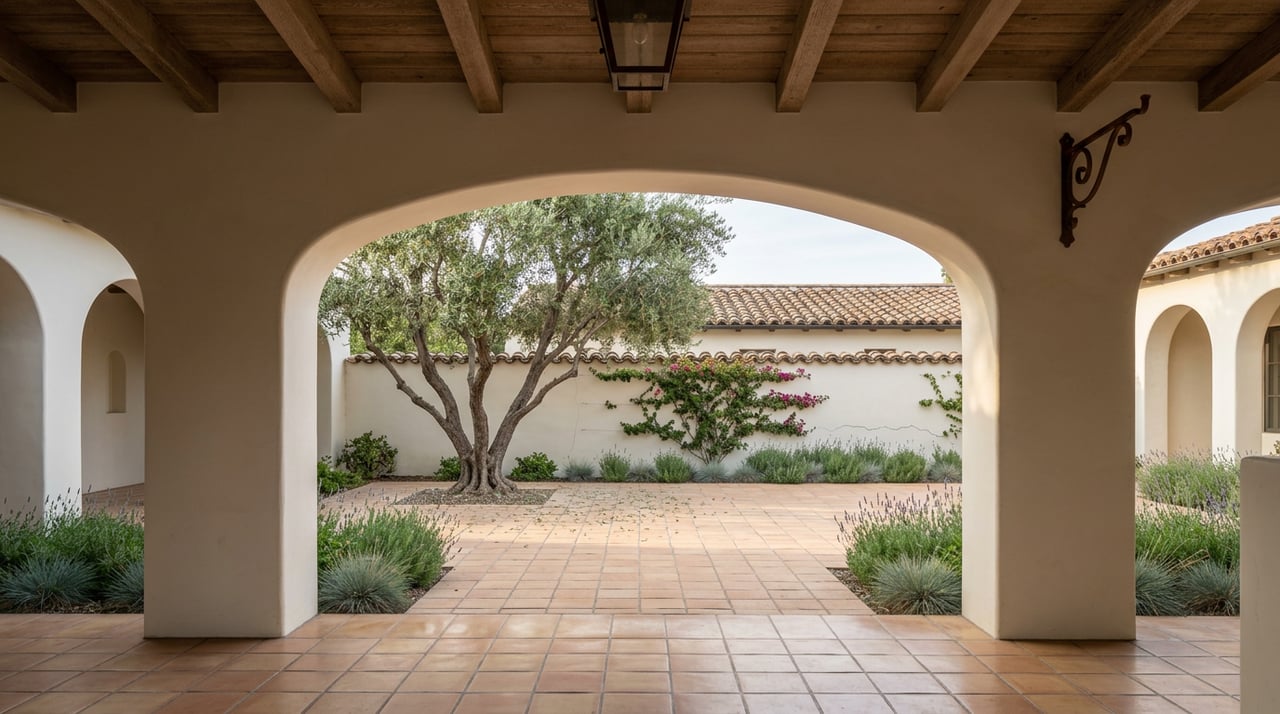
Fullerton's Mills Act Isn't a Tax Break, It's a Contract You Inherit
September 10, 2026
September 10, 2026
Say you're touring a 1920s bungalow on Brookdale Place. The agent mentions the house carries a Mills Act contract, and your first thought is probably the right one for the wrong reason: lower property taxes. What that listing sheet doesn't tell you is that the discount comes wrapped in a legal document recorded against the title, one that binds you to a decade of exterior maintenance obligations, a five-year inspection cycle, and a cancellation penalty if you ever want out. You're not buying a tax break. You're buying into someone else's contract.
That distinction matters more in Fullerton than in most Southern California cities, because Fullerton has 16 residential areas designated as Historic Districts, and ten of those carry the added protections of Residential Preservation Zones. If you're buying, selling, or already living in one of these neighborhoods, understanding how the Mills Act actually works, not just what it promises, is the difference between a smooth escrow and a surprise at the closing table.
The Mills Act is state enabling legislation from 1972 that lets cities like Fullerton sign property tax reduction agreements with owners of qualifying historic homes, in exchange for a real commitment to restore and maintain them. Fullerton's City Council adopted its own Mills Act Program in April 2020, administered jointly by city planning staff and the nonprofit Fullerton Heritage, which also designed the entry signage now marking the city's historic districts.
Here's the part that gets glossed over in casual conversation: the tax break isn't calculated off comparable sales in the neighborhood. County assessors value Mills Act properties using an income capitalization approach instead of the standard market approach, which typically produces its biggest savings right after a purchase triggers a new assessment. That's a structural detail worth sitting with, because it means the program is built to reward the buyer who applies soon after closing, not the owner who's held the house quietly for fifteen years.
| Program detail | Figure |
|---|---|
| Historic Districts citywide | 16 |
| Districts also designated Preservation Zones | 10 |
| New contracts allowed per year | 10 |
| Total contracts allowed citywide | 50 |
| Application processing fee | $1,520 |
| Annual processing fee after approval | $85 |
| Maximum assessed value to qualify | Under $800,000 |
| Cancellation penalty | 12.5% of assessed fair market value |
| City inspection cycle | Every 5 years, interior and exterior |
| Rehabilitation plan renewal | Every 10 years, filed 90 days before term ends |
Fullerton's own program guidelines are direct about this: the Mills Act Contract is a legally binding document recorded against the property, and it runs with the property, binding on all future owners. That single clause is the reason a buyer's due diligence on a historic Fullerton home can't stop at "yes, it has Mills Act." You need to see the actual contract and the current rehabilitation and maintenance plan, because you're not evaluating a discount, you're evaluating a set of obligations you're about to assume for whatever years remain on a rolling ten-year term.
The rolling part is easy to miss too. These contracts automatically renew each year, so the term is always ten years out from wherever you currently stand. If a prior owner tried to cancel it, the property stays under contract for the remainder of that ten-year window regardless. There's no walking away early without cost.
Buyers sometimes assume the Mills Act discount can fund whatever renovation they're planning. It can't, at least not the interior part. Fullerton's guidelines are specific: eligible work must relate to the exterior or building systems, and cosmetic interior improvements like kitchen or bathroom renovations don't qualify as Mills Act rehabilitation spend. If your plan for a historic Fullerton purchase includes modernizing the kitchen, that project sits entirely outside what the contract is designed to support, even while the roof, foundation, windows, and stucco fall squarely inside it.
That's not a minor footnote. It reshapes the financial logic of buying one of these homes. The tax savings exist to subsidize the unglamorous, structural, exterior-facing work that keeps a historic property standing and period-accurate, not the renovation most buyers are actually excited about.
Fullerton caps new Mills Act contracts at 10 per year and 50 total citywide, and once the program hits that ceiling, the City Council has to formally reauthorize it before accepting more. As of a February 2026 City Council action approving a contract for 432 West Brookdale Place, that property became the 12th contract in the program's history and the first application submitted that calendar year. Just seven months earlier, in August 2025, a proposed contract for 621 North Richman Avenue, a 1930 Spanish Colonial Revival built for local civic figure Harry Ann Suiters and designated Historic Landmark HL 109, was under review as only the eighth contract, with just three applications submitted citywide that entire year.
Read those two data points together and the pattern is clear: this isn't a rolling first-come benefit. It's a narrow annual gate, and a buyer who closes on a historic Fullerton home expecting to apply for Mills Act relief themselves should know they're getting in line behind a small, unpredictable number of open slots each year, not applying for something automatic.
The $800,000 assessed value ceiling adds another layer of friction. In a market where resale prices on updated historic homes can climb well past that figure, a buyer's own purchase price, once reassessed, can push a property above the eligibility line before they ever get to apply, even if the prior owner qualified easily years earlier.
The numbers behind actual approved contracts show how the incentive really works. When the City Council approved a contract for 336 West Brookdale Place, a 1916 Craftsman owned by Kyle and Shana Beym, the same June 2025 meeting also approved one for a home built by noted Fullerton developer Harry G. Maxwell, whose owners committed to reapplying stucco, repainting the exterior, and completing seismic retrofitting over the coming decade.
The Richman Avenue proposal from August 2025 laid out the trade-off in plain dollars: the city's own analysis estimated Fullerton would forgo roughly $672 a year in property tax revenue on that one property, or about $6,720 over the ten-year contract term. In exchange, the owner committed to investing nearly $63,000 into preservation work. City staff called that an acceptable trade for the reinvestment it buys in the neighborhood's housing stock, though the same council meeting saw public pushback over the city giving up tax revenue at all.
The February 2026 approval for 432 West Brookdale Place followed a similar shape at a larger scale, with a rehabilitation and maintenance plan totaling up to $84,700 for termite extermination, foundation maintenance, and exterior repair, passed on a 4-1 vote with Mayor Pro Tem Nicholas Dunlap dissenting.
In every case, the owner's committed capital spend dwarfs the annual tax savings by a wide margin. That's the mechanism working as designed. The Mills Act isn't meant to make historic ownership cheaper year to year. It's meant to convert a modest, ongoing tax discount into a forcing function for real capital investment in aging exteriors and structural systems that might otherwise get deferred indefinitely.
If you're buying or selling inside one of Fullerton's 16 historic districts, a few concrete steps protect you regardless of which side of the transaction you're on.
Does every home in Fullerton's historic districts have a Mills Act contract? No. Being located within one of the 16 Historic Districts or a Residential Preservation Zone makes a property eligible to apply, but the contract itself only exists for the roughly four dozen properties citywide that have actually gone through City Council approval.
Can a new owner cancel an inherited Mills Act contract? Yes, but not without cost. Fullerton's guidelines impose a penalty equal to 12.5% of the property's assessed fair market value for a canceled contract, and the process requires a formal request rather than simply letting the agreement lapse.
Who actually processes the tax reduction once a contract is approved? The Orange County Assessor's Office handles the reassessment once a contract is recorded with the City by the end of the calendar year, with savings typically appearing on the following year's property tax bill.
If you're weighing a purchase or a sale inside one of Fullerton's historic districts and want to understand what a specific Mills Act contract means for your numbers, Meri Rama and her team can walk through the details with you. Get a Free Home Valuation to start the conversation with a clear picture of what you're actually buying or selling.
Stay up to date on the latest real estate trends.




Partner with a team that values integrity, precision, and exceptional service at every step.

MERITA RAMA | CA DRE# 01297882 | RCR ENTERPRISES, INC.
ADDRESS 13604 WHITTIER BLVD WHITTIER, CA 90605